A Small Holiday Project, and a Lesson About Noise
Over the holiday break, I returned to something I enjoy but rarely make time for: 3D printing. No agenda. No roadmap. Just practical tinkering.
That timing mattered, because our house is very old, and every winter we face the same issue: heavy condensation on large windows. Not a light mist—actual water buildup. The usual solution is a squeegee and paper towels. I’ve done that for years. It’s tedious, messy, and wasteful. You squeeze, wipe, repeat, throw everything away, and still drip water onto the sill.
Eventually, I got tired of it.
A Constraint-Driven Idea
Instead of asking “What do people normally do?”, I asked a simpler question:
What do I already have that could remove water cleanly?
The answer was a wet/dry vacuum.
I tried it. It worked extremely well. No mess. No towels. Just vacuum the water and dump the container. Problem solved.
But immediately, another issue appeared: the standard wet-vac nozzle isn’t ergonomic for vertical glass. You have to manage angle, pressure, and direction. It works, but it’s awkward.
So the next question became obvious:
What if the nozzle didn’t care about angle?
Designing for the Actual Problem
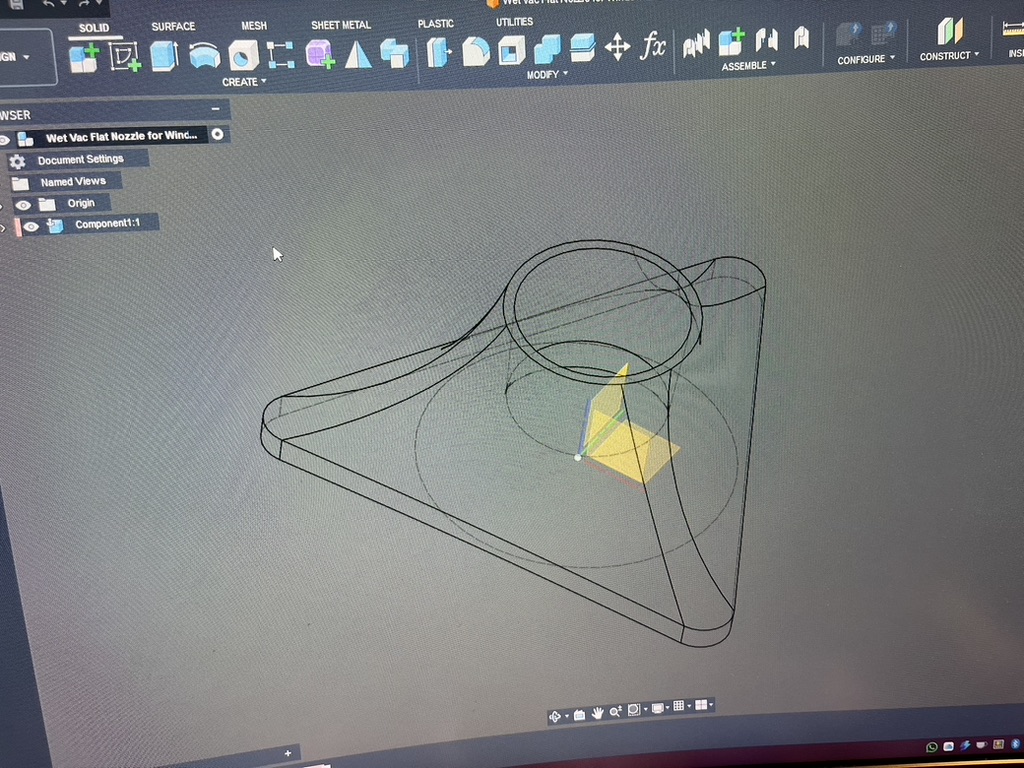
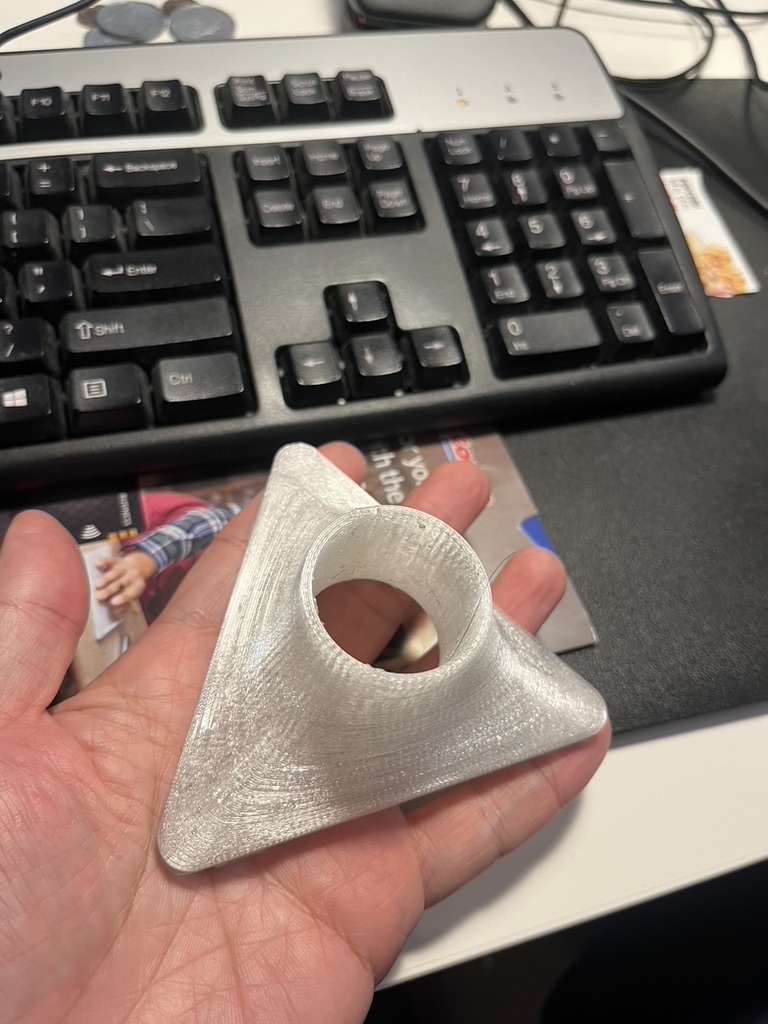
I designed a triangular suction nozzle that could pull water from all sides. A few iterations later, I printed it and tested it.
It worked really well.
No need to think about how I was holding it. No fiddling with wrist angles. Just place it on the glass and move. It even stays on the glass because of the suction.
At that point, this stopped being just a personal fix. It became an example of functional, constraint-driven design. So I shared it—on Reddit and Facebook, in functional 3D printing communities.
The Response: Noise
Most of the feedback was negative.
Not technical criticism. Not design questions. Just dismissal.
- “Just use a squeegee and a towel.”
- “You’re wasting electricity.”
- “Why are you vacuuming a window?”
Only a handful of people actually engaged critically:
- Some suggested more improvements.
- Some pointed out that this level of condensation suggests deeper environmental factors.
- Others mentioned dehumidifiers or insulation issues (which we already have and have tested).
- Some also showed interest in the design and wants to try it themselves.
Those comments were thoughtful. The rest were noise.
Noise vs. Thinking
What struck me wasn’t disagreement—it was the absence of situational thinking.
People reacted to the idea in isolation, without considering:
- The specific constraints of an old house
- The severity of the condensation
- The goal of eliminating waste and mess
- The fact that the solution already worked
They weren’t evaluating the solution against the problem. They were comparing it against their default assumptions.
That’s noise.
Noise is response without context.
Noise is pattern-matching without understanding.
Noise is optimizing for familiarity instead of effectiveness.
Pragmatic Problem Solving
From my perspective, this was straightforward engineering:
- Observe a recurring problem
- Identify constraints
- Reuse existing tools
- Improve, Iterate
- Ship a working solution
No ideology. No purity test. Just pragmatism.
But the experience was a reminder: the world is full of opinions that are cheap, shallow, and unexamined. Signal—actual critical thought—is rare.
The Real Takeaway
The value of this project wasn’t the nozzle itself.
It was the reminder that:
- Good solutions are often misunderstood outside their context
- Public feedback is mostly noise
- Thinking clearly under real constraints matters more than consensus
And sometimes, the right response isn’t to explain further—but to recognize noise for what it is, discard it, and keep building.
That, more than anything, made this small holiday project worth it.
here is the nozzle.